Every spring the same argument breaks out in the bleachers: should kids swing at the first pitch? Everybody has an opinion. Almost nobody has an answer, because the box score does not keep one.
So I went and built the answer. I reconstructed all 1,439,047 pitches of the 2026 Division I softball season from free public play-by-play, checked the totals against official box scores, and split every at-bat by one thing: what happened on pitch one.
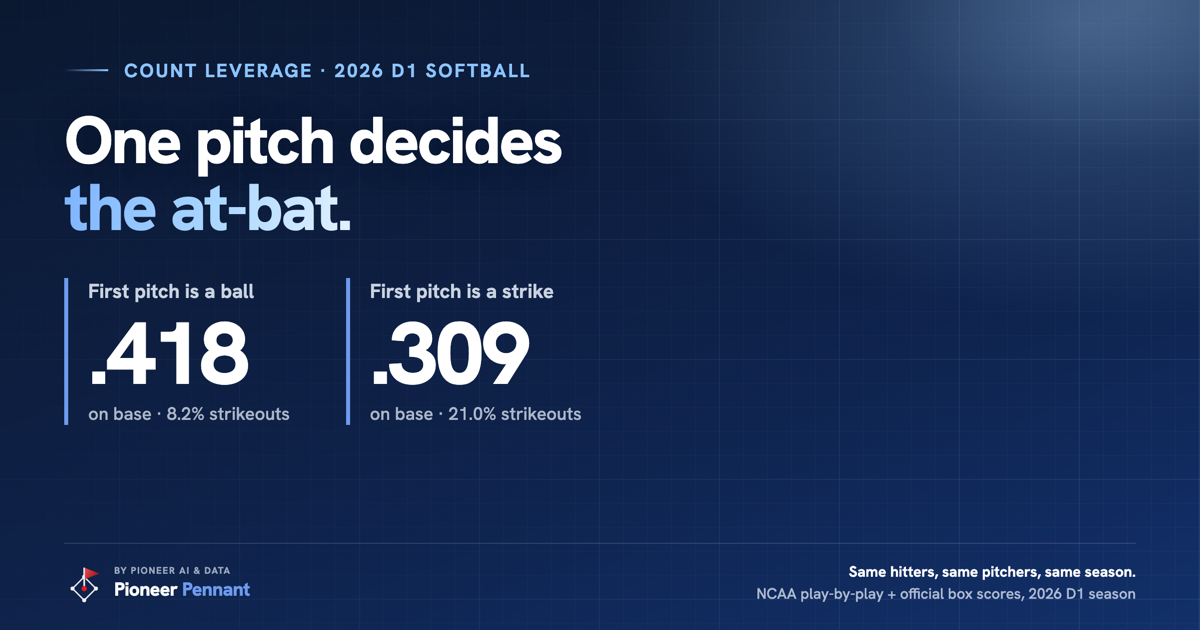
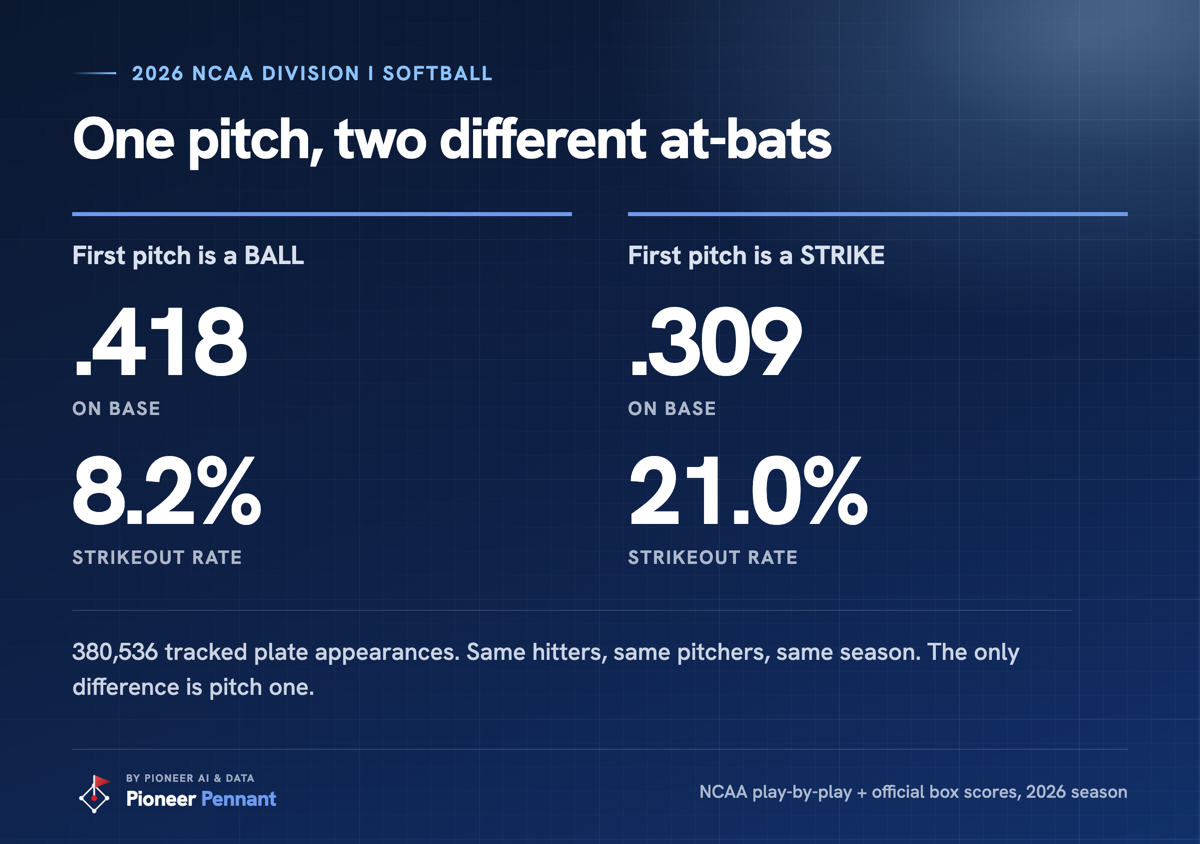
First pitch is a strike: .309 on base, 21.0% strikeouts.
Same hitters, same pitchers, same season. The only thing that changed is one pitch, and the strikeout rate more than doubled.
0-1 is a deeper hole than it looks
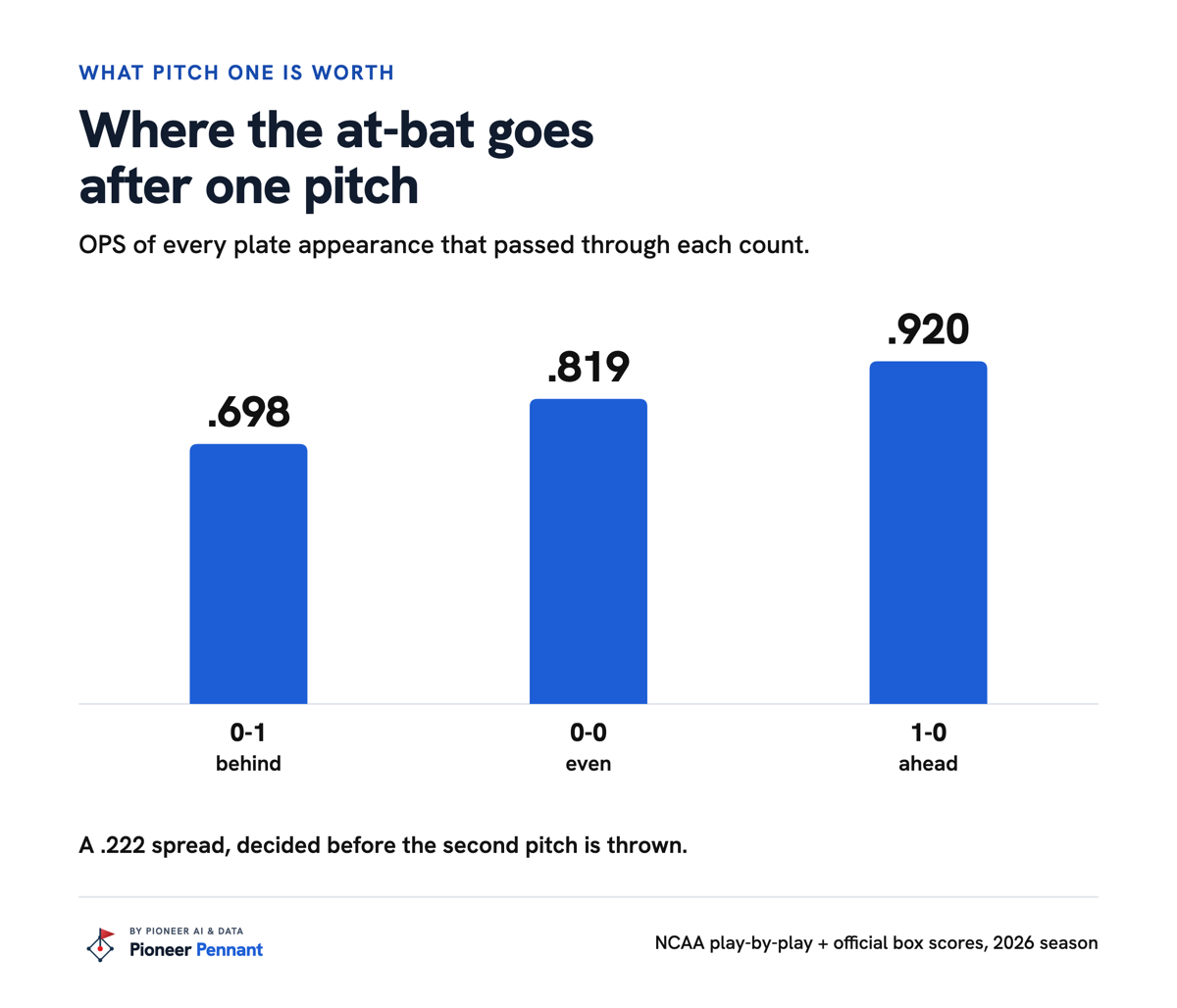
Falling behind is not a small thing that good hitters shrug off. At-bats that pass through a 1-0 count finish with a .920 OPS. At-bats that pass through 0-1 finish at .698. That gap, 222 points of OPS, is wider than the distance between an average hitter and an all-conference one, and it is decided before most parents have looked up from their phones.
The most common pitch in the sport gets the least practice
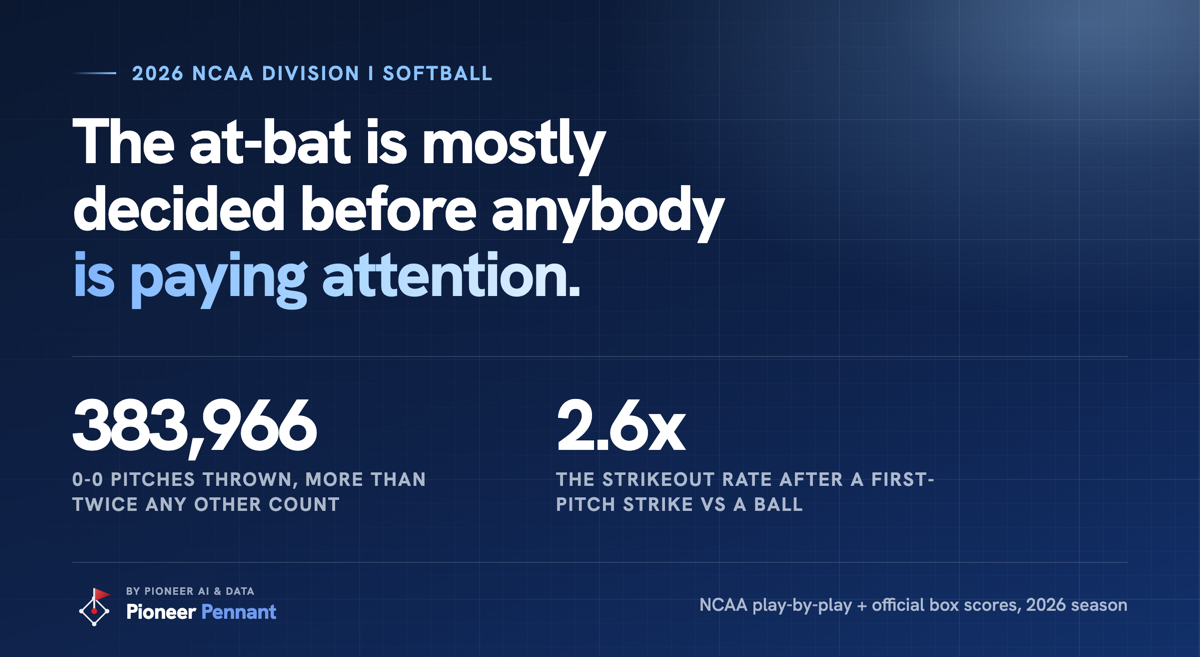
Here is the part I keep coming back to. The 0-0 pitch was thrown 383,966 times this season, more than twice as often as any other count. It is the only pitch every single hitter is guaranteed to see. And in most cage sessions it is treated as a warmup, while the two-strike emergency gets the whole bucket of balls.
The at-bat is mostly decided before anybody is paying attention. If your hitter has a plan for 0-0, she is ahead of most of the country before the pitcher lets go of the ball.
Method, briefly: pitch-level data reconstructed from free public play-by-play feeds for all 8,161 games, validated against official NCAA box scores across 15,800 team-games (reconstructed hit totals match exactly in 98.7% of them). Every number in this post is re-checked by code against the dataset before the page builds. When a number here and the data disagree, the page refuses to publish.
Figuring out where your player fits in college?
Pioneer Pennant Process covers all 978 NCAA softball schools: coaches and how to reach them, cost after aid, majors, and a fit score built on one rule. Go where you are going to play, not as high as you can go.