Softball, by the numbers.
What the data actually says about the game in front of you, and about getting recruited to play it in college. The numbers we compute ourselves are reconstructed from public play-by-play and machine-checked before publish.
Read the findings.
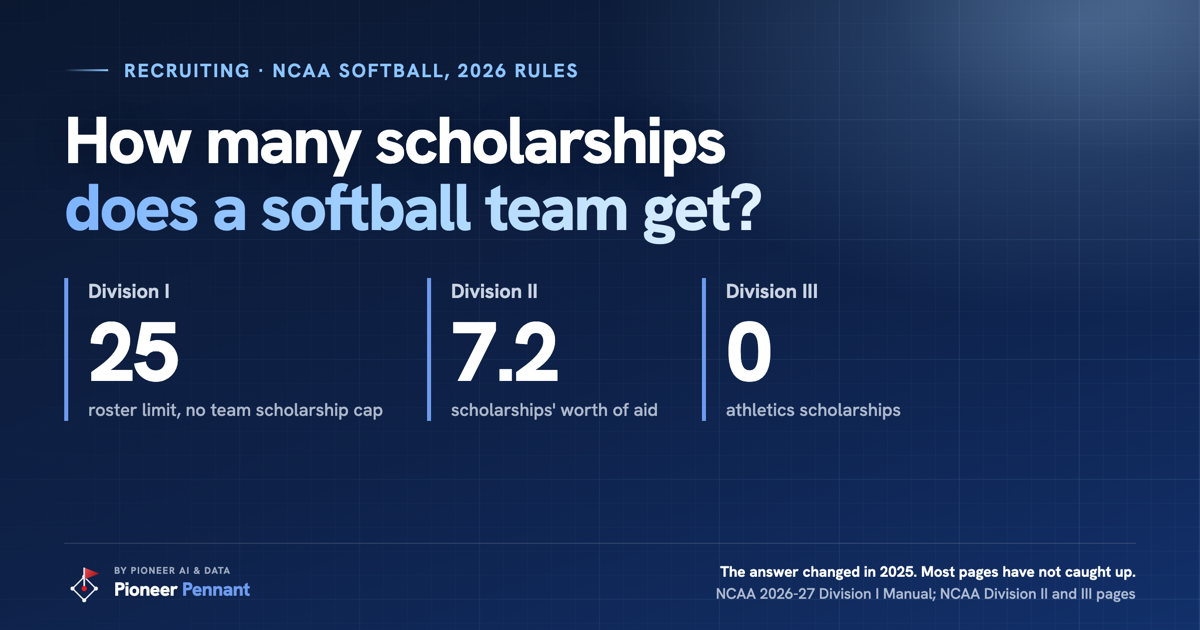
How Many Scholarships Does a College Softball Team Have? The 2026 Answer by Division
Division II softball teams share 7.2 scholarships' worth of aid, Division III has none, and Division I has no NCAA team limit at schools under the roster limit of 25. Here is what that means for a family's bill.
Read it →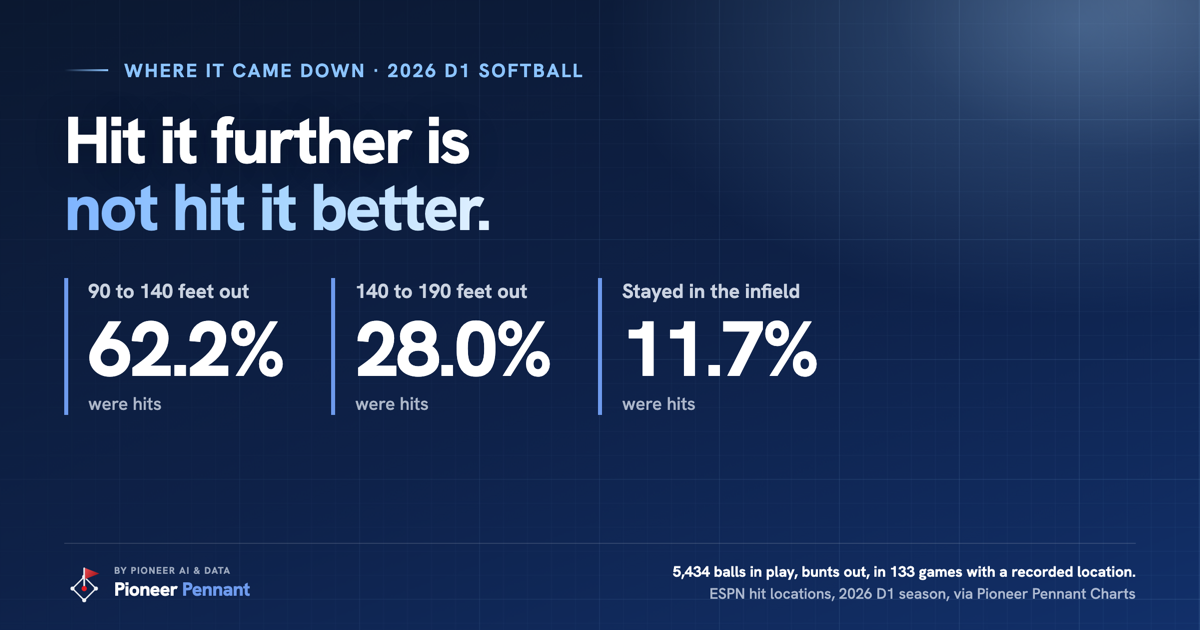
Softball Batted Ball Distance: Where a Ball Lands Decides Whether It Is a Hit
Of 5,434 Division I softball balls in play with a recorded location, the ones that came down 90 to 140 feet from the plate were hits 62.2% of the time and the ones that came down 140 to 190 feet out were hits 28.0% of the time. Hitting it further is not the same as hitting it better.
Read it →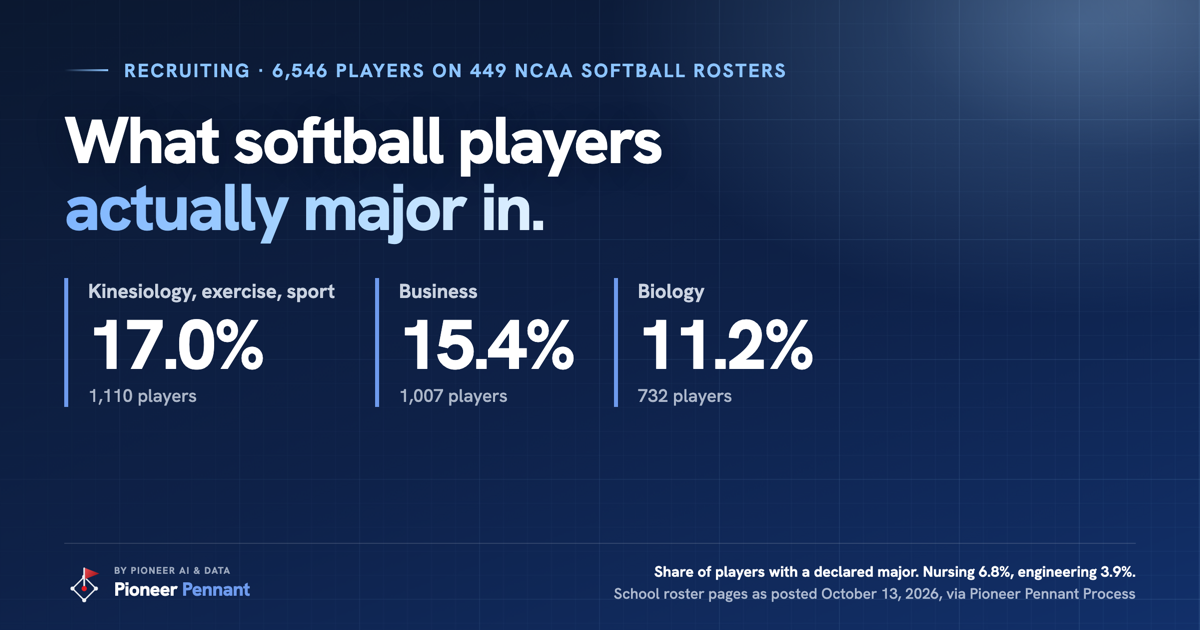
College Softball Majors: What 6,546 Players Actually Study
Kinesiology, exercise science and sport management lead the majors college softball players list, at 17.0% of 6,546 players with a declared major on 449 NCAA rosters, ahead of business at 15.4% and biology at 11.2%. Nursing is 6.8% and engineering 3.9%, and where nursing is offered, Division III players list it more than three times as often as Division I players.
Read it →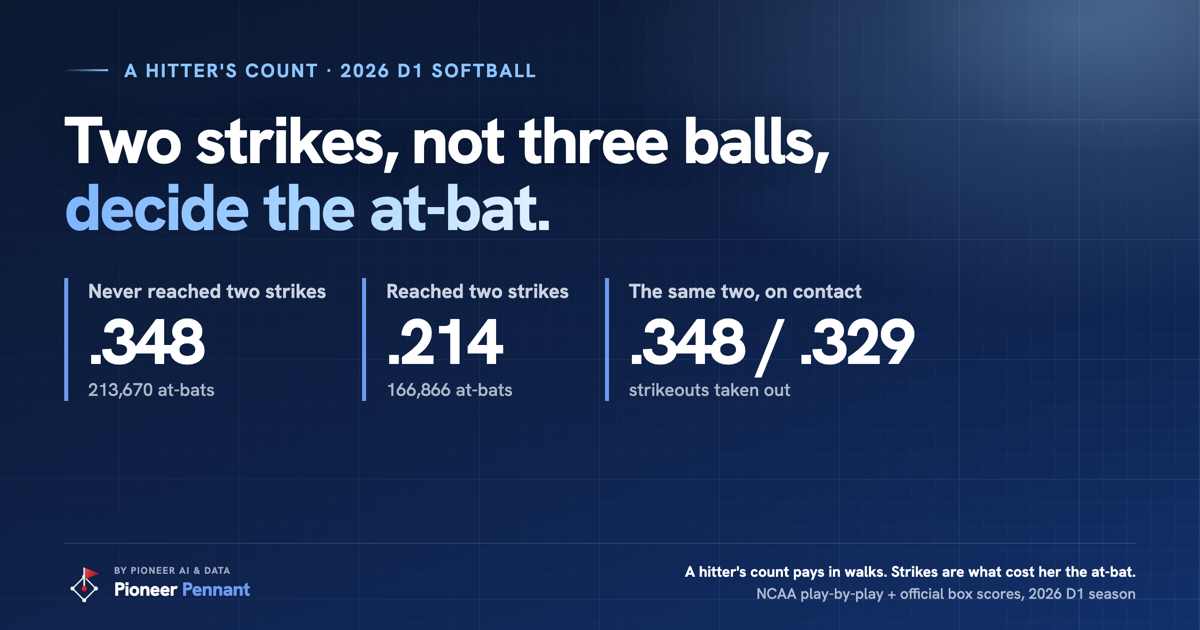
What a Hitter's Count Is Worth in College Softball
At-bats that reached 3-0 finished at .316 in the 2026 Division I season and at-bats that reached 0-2 finished at .199. Almost none of that gap is about hitting the ball better, and three straight balls are worth 28 points of batting average.
Read it →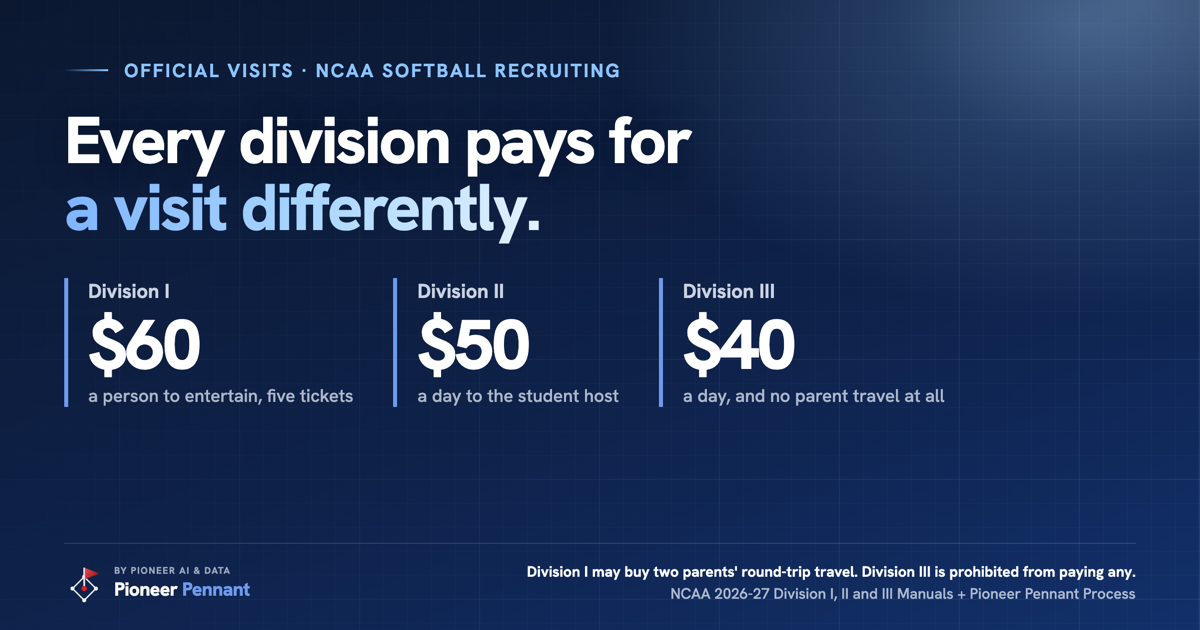
Official Visits in College Softball: What Each Division Can Pay For
An official softball visit is the campus trip the school pays for, and the three NCAA divisions do not pay for the same things. Division I can buy round-trip tickets for two family members, Division III is forbidden from paying a parent's travel at all, and the schools nearest most families are the ones least able to cover the trip.
Read it →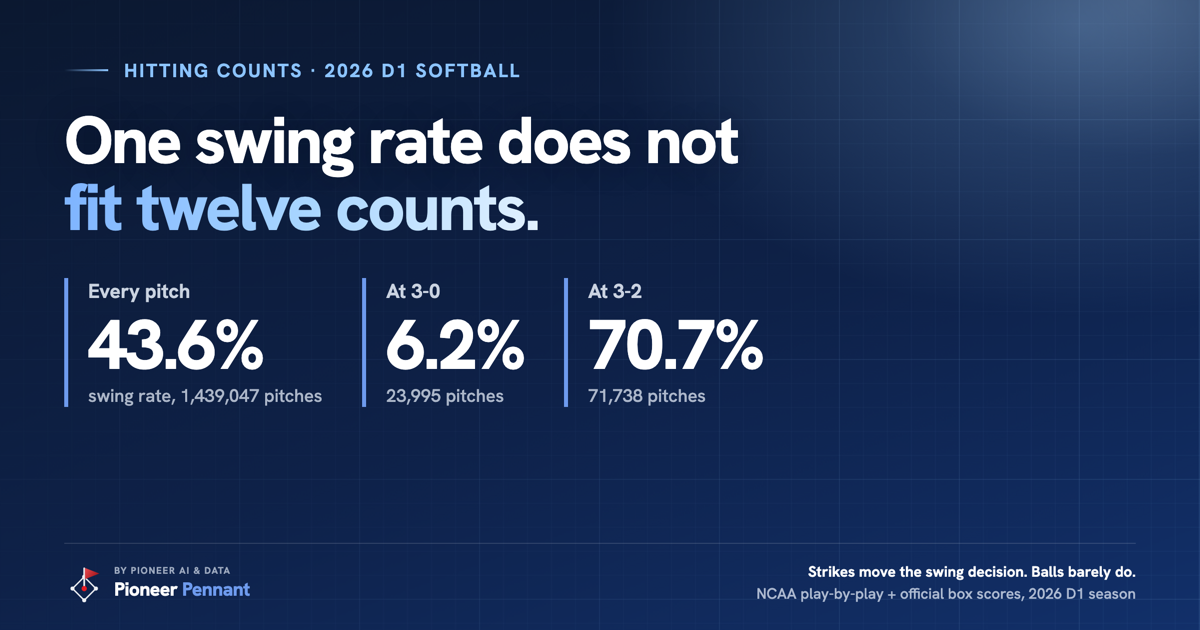
Softball Hitting Counts: What Division I Hitters Actually Swing At
Division I softball hitters swung at 43.6% of the 1,439,047 pitches thrown in the 2026 season. By count it runs from 6.2% at 3-0 to 70.7% at 3-2, and strikes move the decision far more than balls do.
Read it →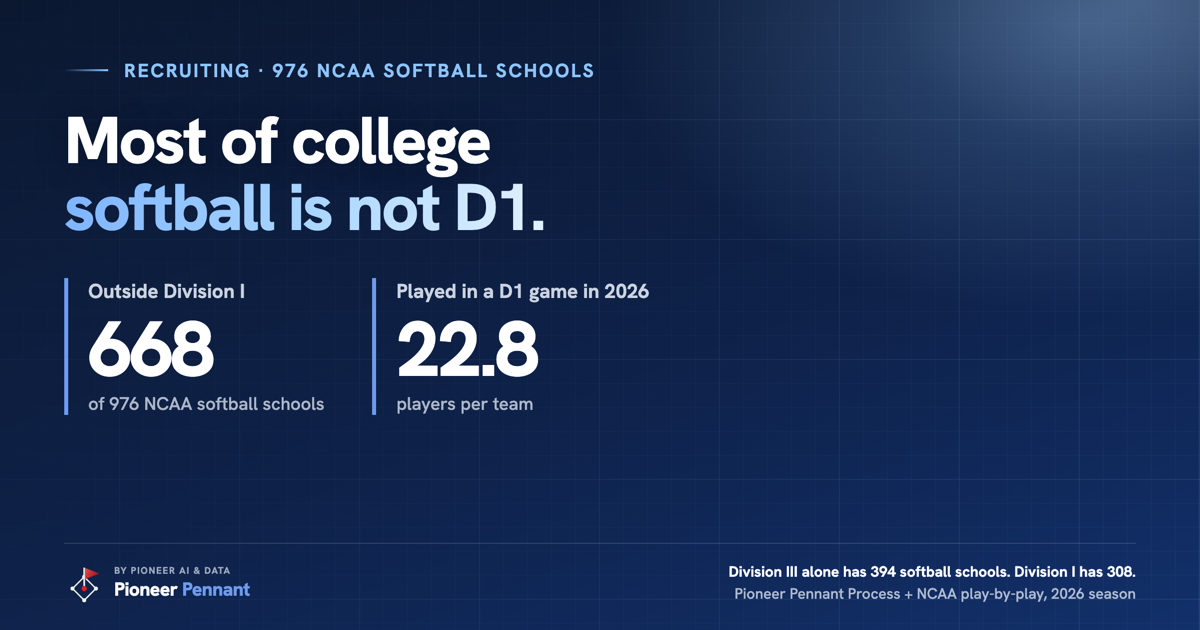
D1, D2, or D3 Softball: Where Your Player Will Actually Play
Two out of three NCAA softball schools are not Division I, a larger share of high school players ends up in Division III than in Division I, and a roster spot runs about the same size in all three divisions.
Read it →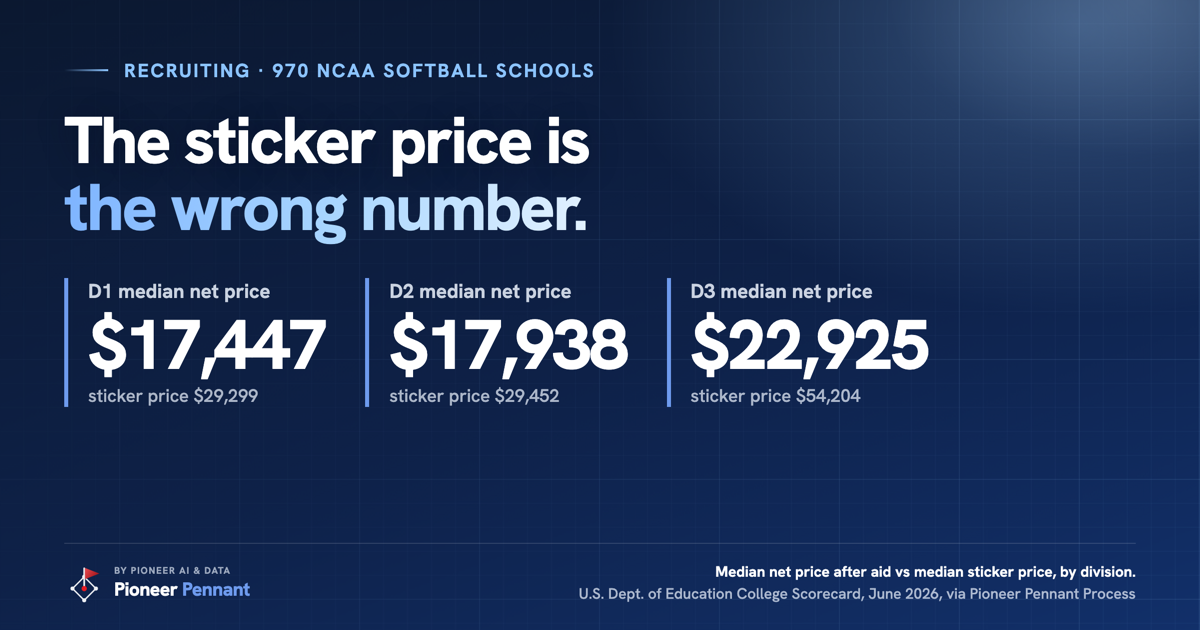
What College Softball Really Costs After Aid: D1 vs D2 vs D3
Across 970 NCAA softball schools, the median school's net price is about half its sticker price, and whether a school is public or private moves the cost more than D1, D2, or D3 does.
Read it →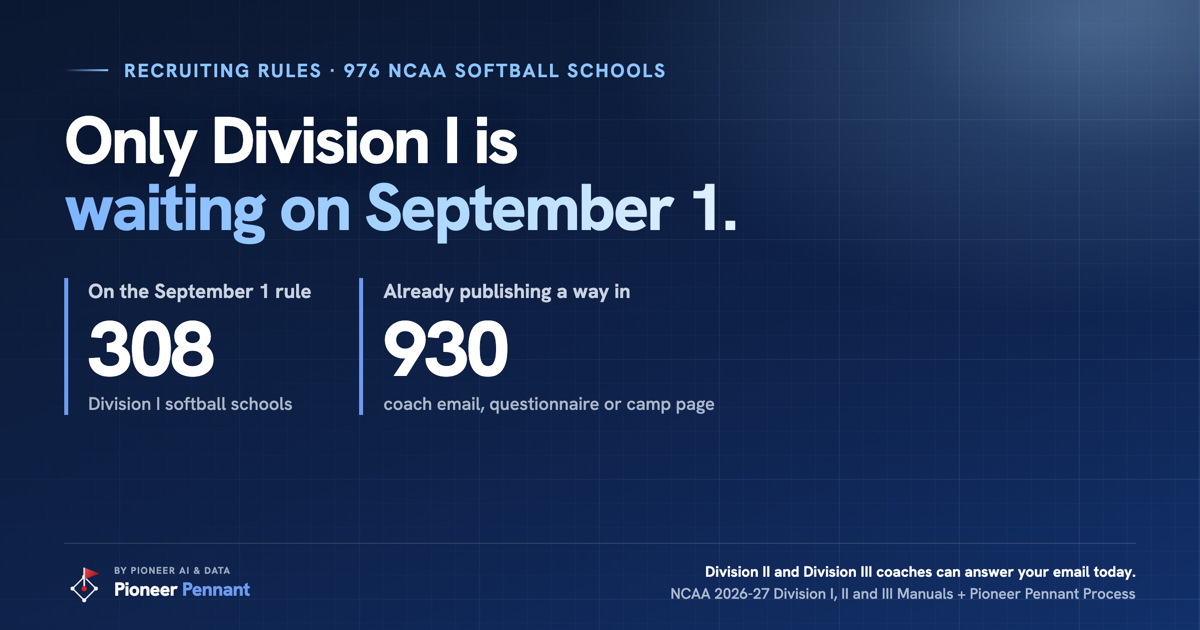
When College Softball Coaches Can Contact You, by Division
The September 1 rule everybody quotes covers 308 of the 976 NCAA softball schools, it now has a time of day attached to it, and 930 of those schools already publish a way for your family to make the first move.
Read it →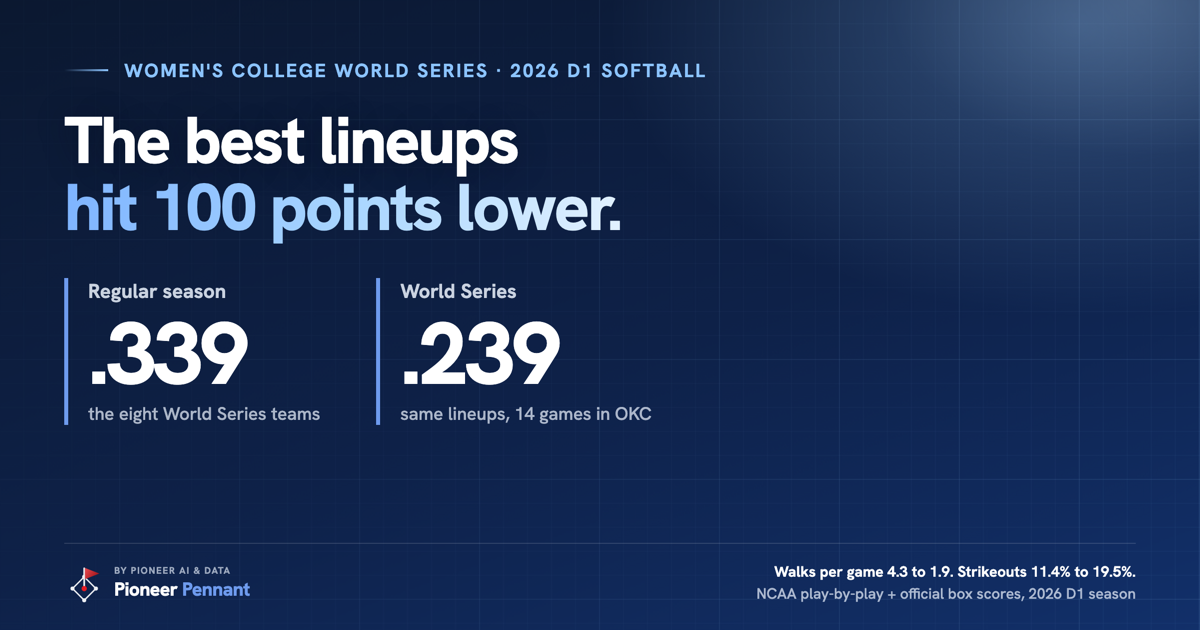
What the Women's College World Series does to the best hitters in softball
The eight teams at the 2026 Women's College World Series hit .339 in the regular season and .239 in Oklahoma City. Walks fell by more than half, and strikeouts nearly doubled.
Read it →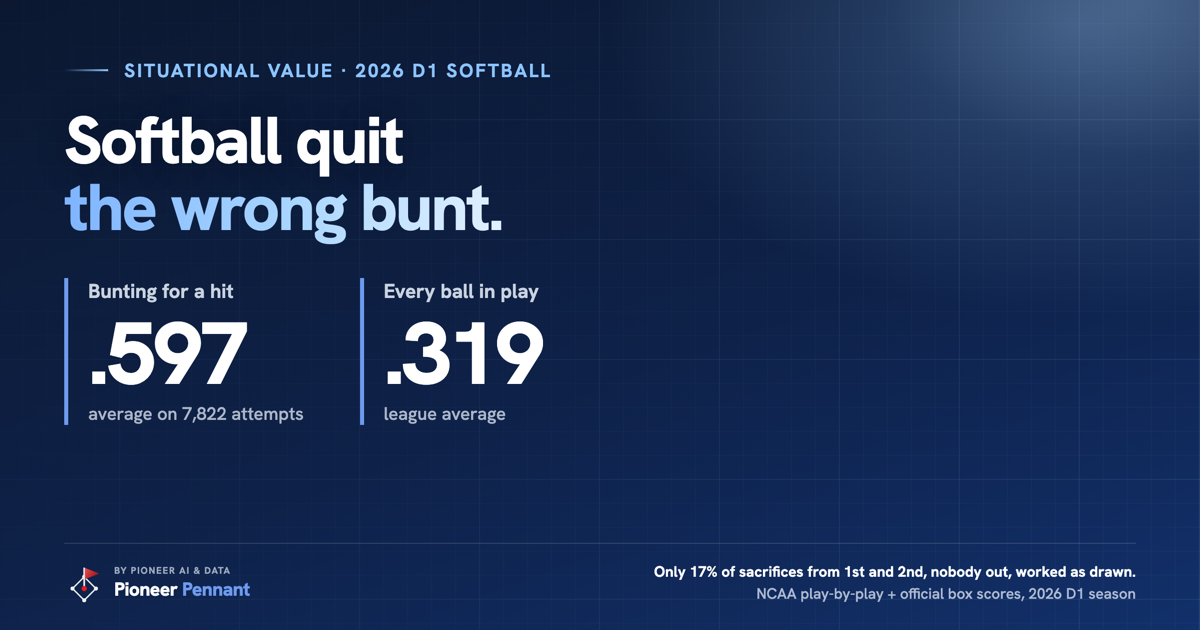
Softball was right to quit the sacrifice. It quit the wrong bunt.
Run expectancy and scoring probability for the full 2026 D1 season: the sacrifice costs runs and scoring odds, while bunting for a hit returns a .597 average.
Read it →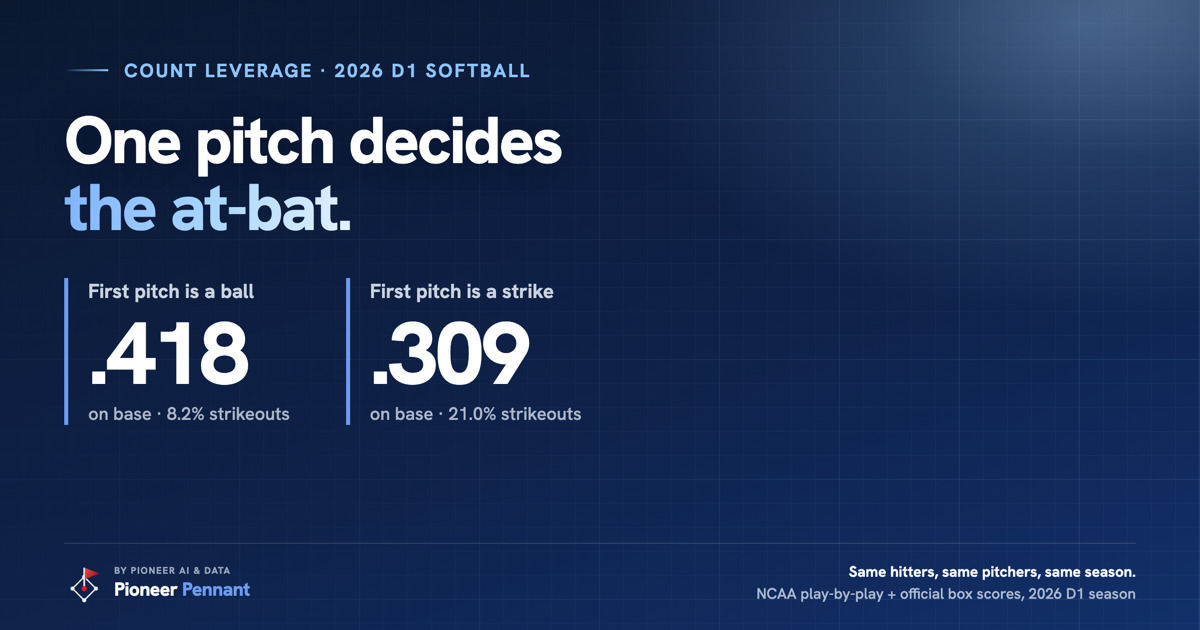
The most important pitch in softball is the one nobody practices
First-pitch ball vs strike across 1,439,047 pitches of the 2026 D1 softball season: .418 vs .309 on base, strikeouts more than doubled.
Read it →